
.svg)
Introduction:
★ About My Work :
Over the past four years, I’ve created more than 1,000 ad briefs for a wide range of e-commerce brands, with a strong specialization in the Health & Wellness space.
The videos you’ll find in this portfolio were produced in collaboration with UGC creators or brand founders I worked closely with.
For each project, I was responsible for developing the concept, writing the script, crafting the creative brief, and sourcing the right creator to bring the idea to life.
★ In the second part of my portfolio, you’ll find my full process and I’d be happy to discuss it with you.
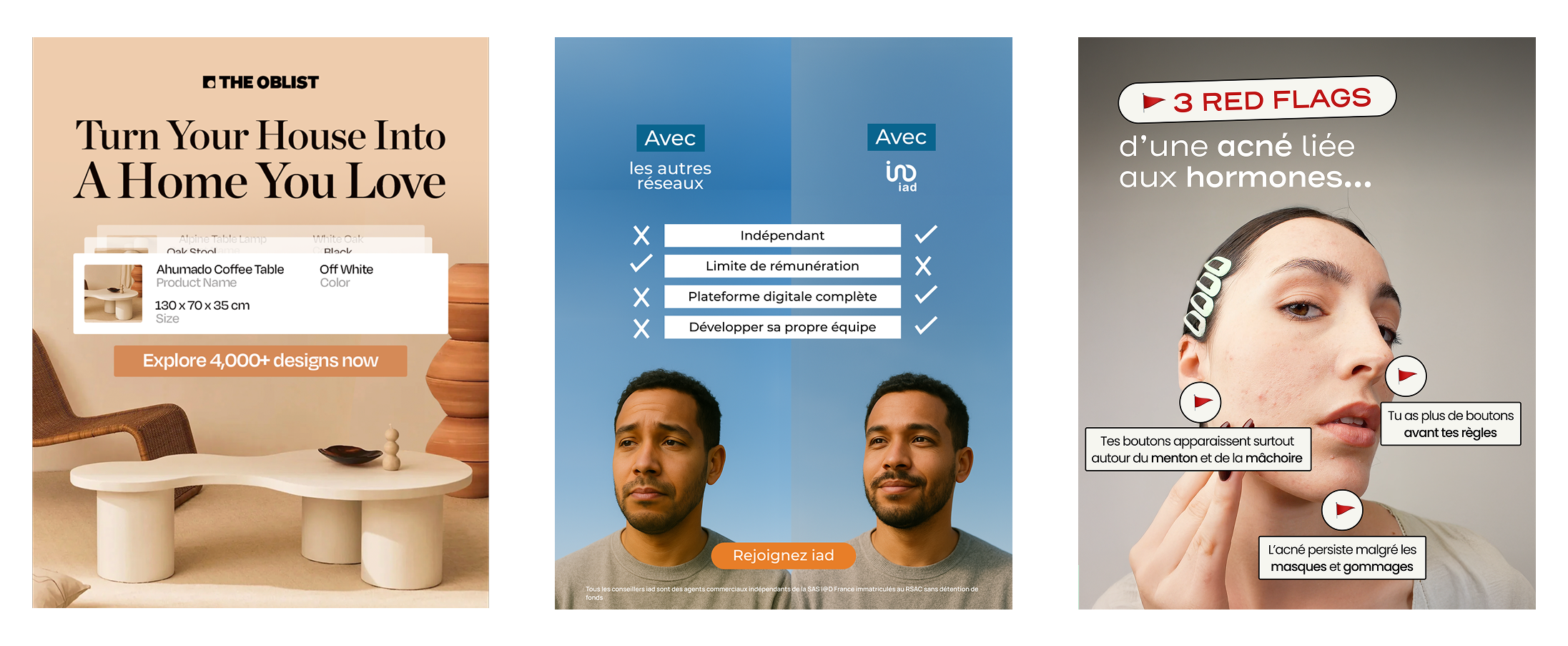
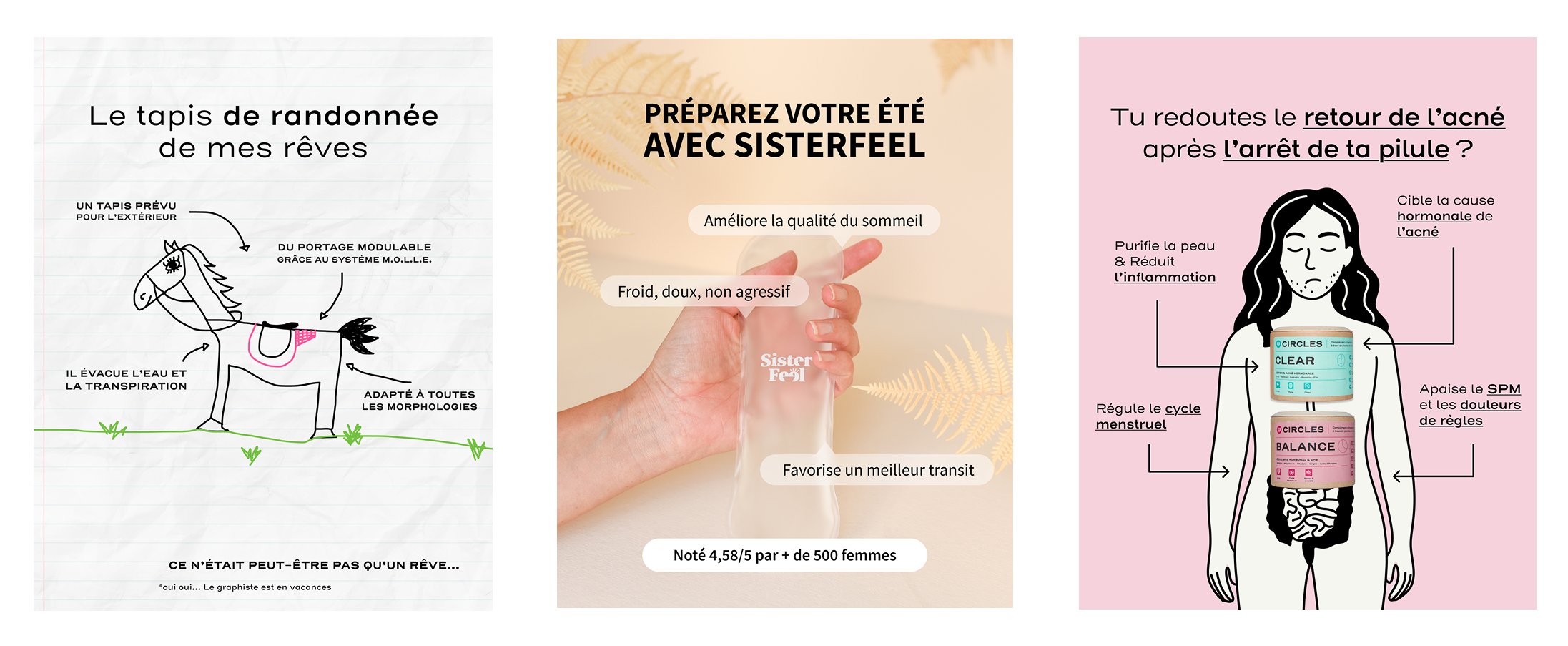
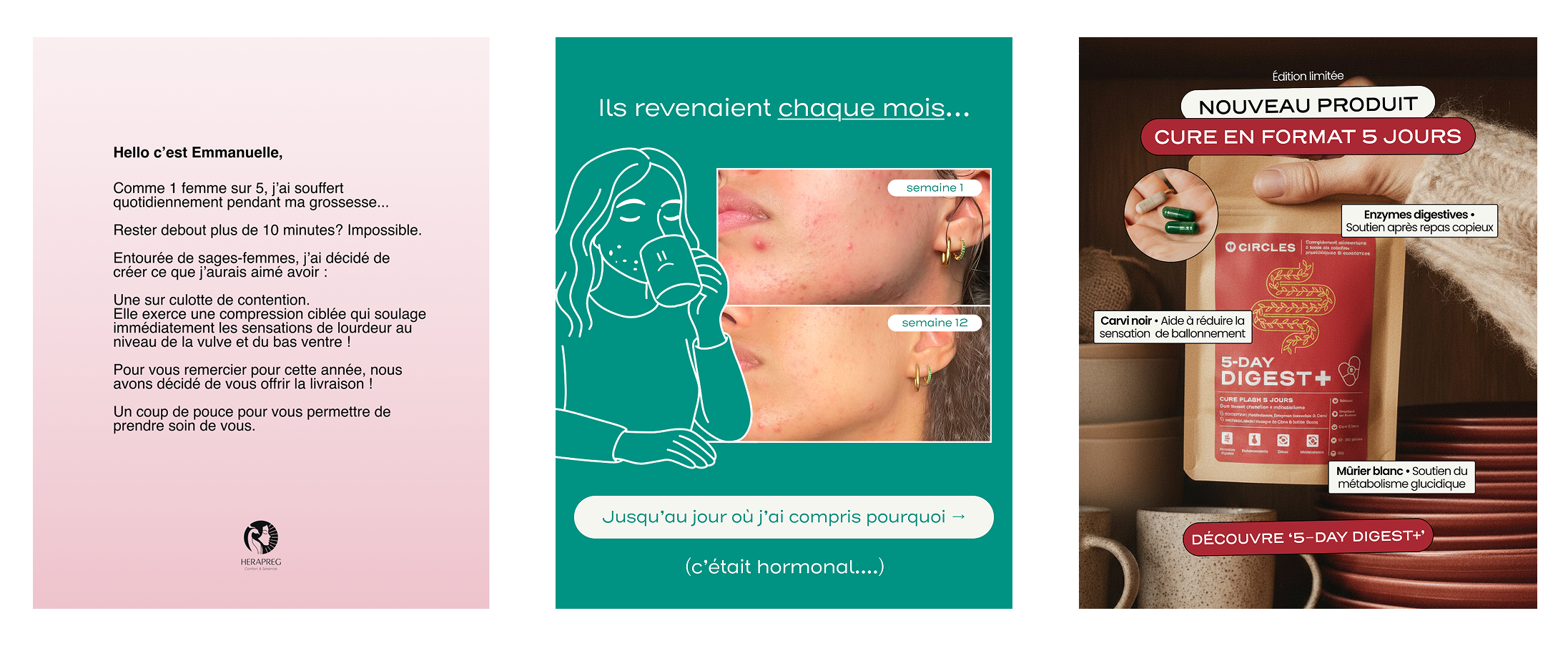
Static Ad Concepts:
UGC & Videos Ads:
Below, you’ll find a selection of videos I created (ideation, scripting, briefing) for various clients.
What matters most (and what you can’t fully see here) is how and why I built them this way. That’s why the second part of this portfolio breaks down my creative process, so you can understand how I analyze, shape, and test each concept.
My Ad Creation Workflow:
Phase 1 • Data Center:
During the onboarding phase, every client receives an Airtable grid that centralizes all the information about their products.
Page 1: Product
Page 2: Value Blocks (linked to each product to minimize copywriting errors and keep me fully autonomous, even with complex offers or topics I’m not familiar with).
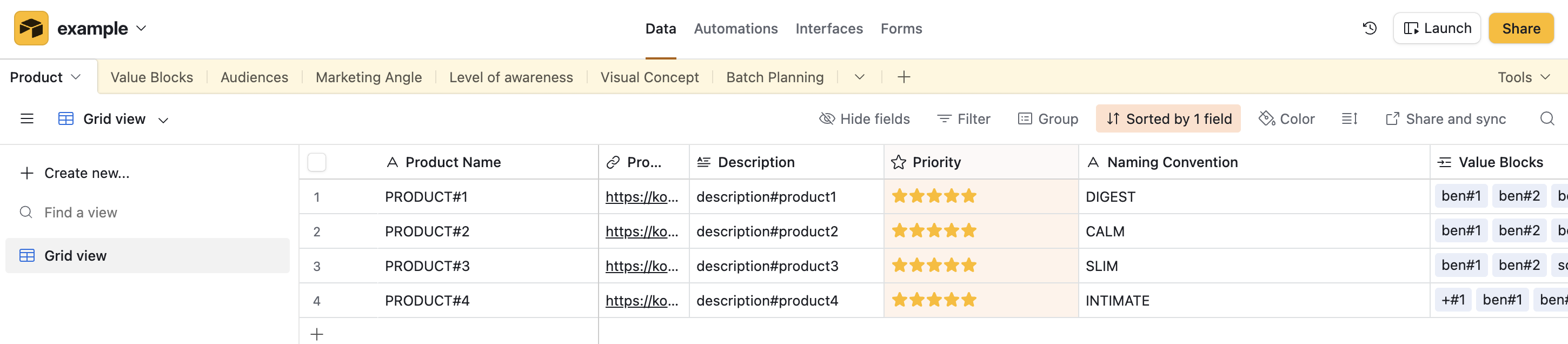
The remaining pages are completed by me: Audience, Marketing Angles, Level of Awareness, and Creative Concepts.
The goal of this Data Center is simple: it’s the foundation for my batching, ideation, and creative planning.

Whenever I produce a new ad, a naming convention is automatically generated and attached to the creative. This allows me to extract very specific insights through dashboards and makes my analysis smoother and faster.

The key is to keep things simple and avoid over-complicating the process.
The elements you absolutely need to track are: Product, Audience, Angle, Level of Awareness, Visual Concept, Format, Date (plus an optional tag if you want to compare creatives against each other).
Phase 2 • Research / Ideation:
When researching creative concepts, we first determine based on account needs, timelines, and budget. Whether we should test or iterate.
It’s important to understand that testing includes not only new visual concepts, but also potential new audiences and new angles.
To support this phase, we use either social platforms directly or tools like Atria (my previous alternative was Foreplay).
We organize our research into boards sorted by client, period (Black Friday, Christmas, etc.), or product. All relevant concepts are saved and categorized there.

Some advertising concepts and hooks that consistently perform well across multiple clients are also categorized internally. This allows us to quickly reproduce strong creative patterns during onboarding.
Recent examples include: Founder Story, 3 Reasons Why, Interview Format, etc.
After analyzing the creatives based on key metrics such as Hook Rate, Hold Rate, CTR, CPC, and CPM, we decide the next actions to take moving forward.
Phase 3 • Briefing:
The next step of our process takes place in ClickUp.
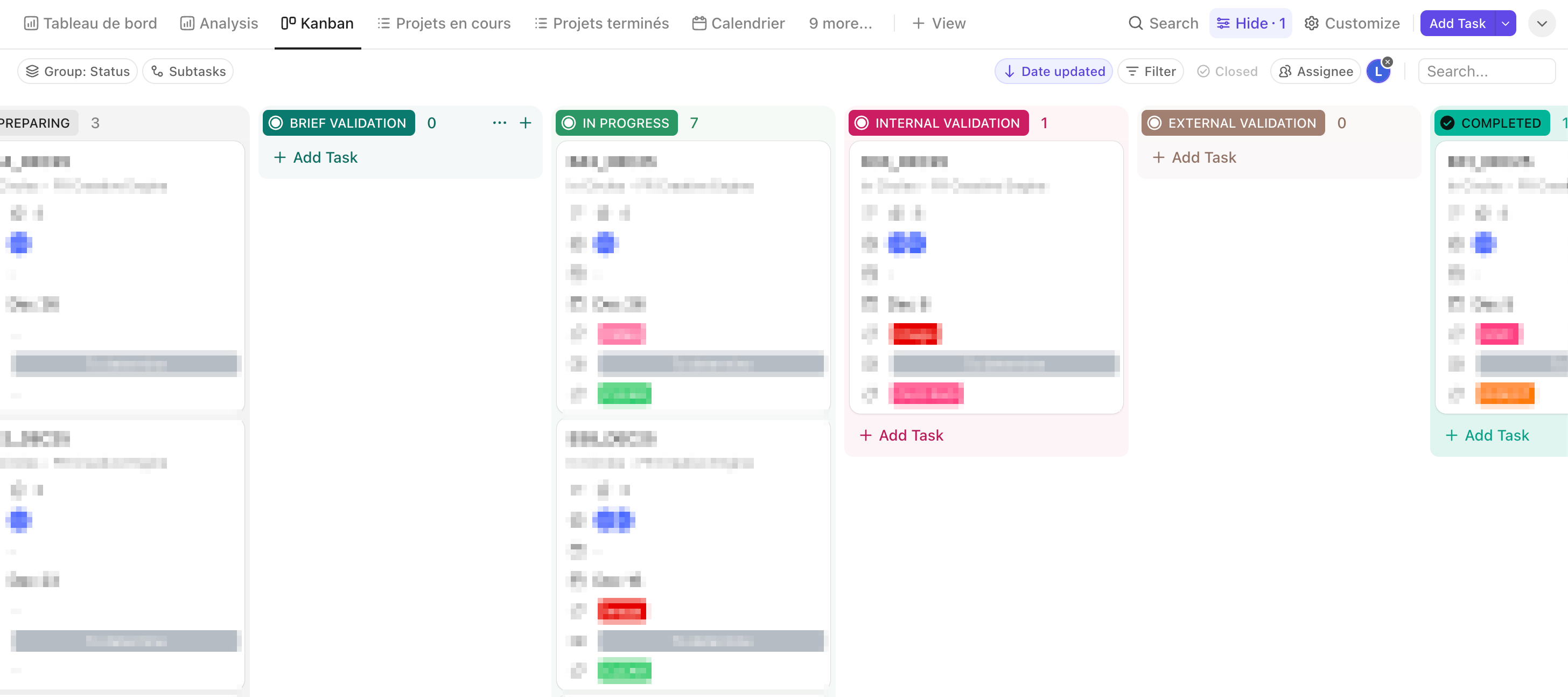
We work with six categories, often shortened internally:
1 • Preparing: Briefs currently being written.
2 • Brief Validation: In most cases, I move briefs directly to In Progress. But when I’m working with new clients or exploring new angles that require client approval, the brief goes into this stage to get feedback on the copywriting.
3 • In Progress: The brief is assigned to a graphic designer or video editor.
4 • Internal Validation: This stage is used when we test new freelancers or new designers/editors (to ensure the creative output meets our standards).
5 • External Validation: The brief is validated by me and, in some cases, by the brand’s art director we’re working with.
6 • Completed: The media buyer selects the final creatives from the brief and can launch the ads.
Phase 3 (part.2) • How I Structure My Briefs:
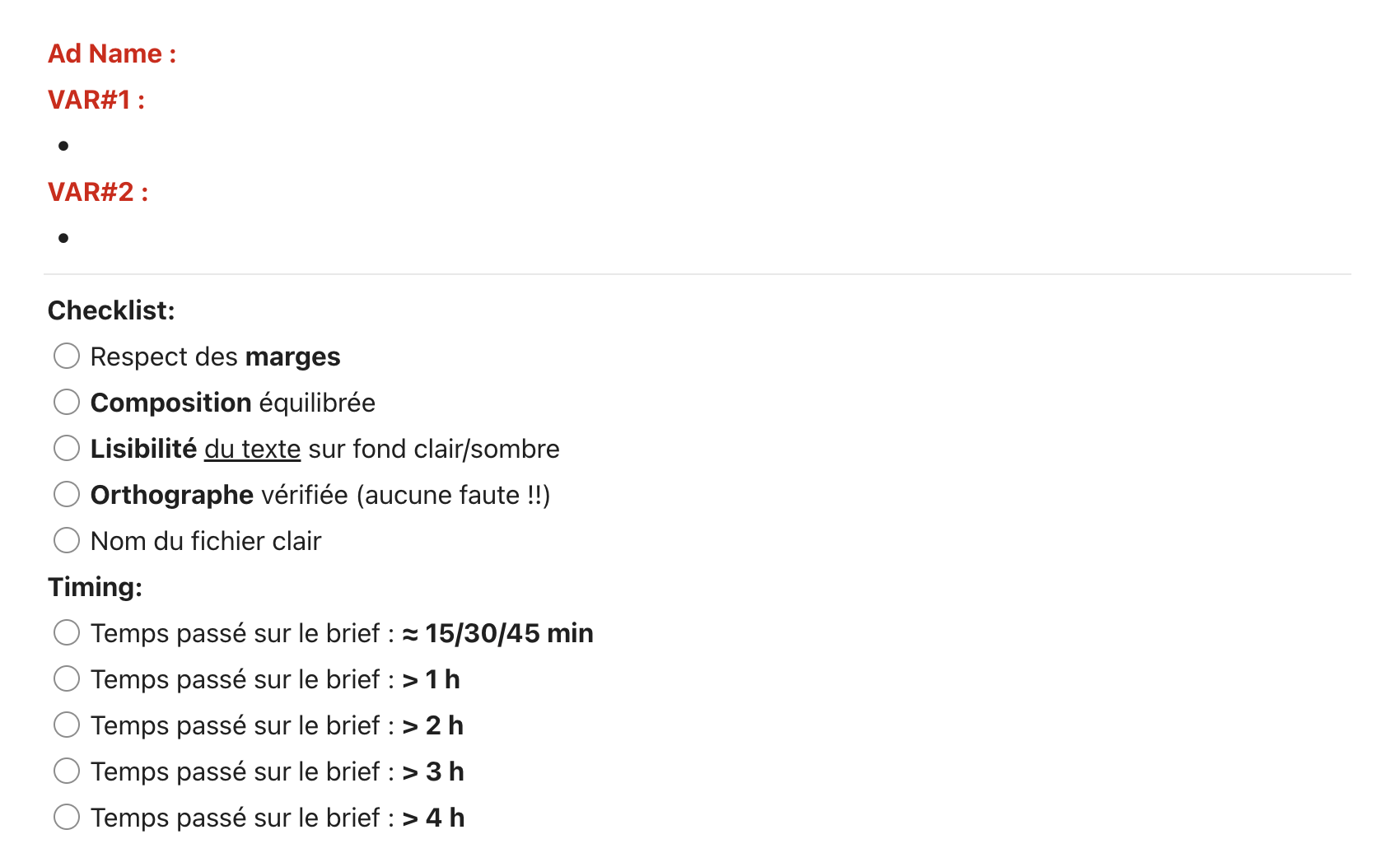
My briefs are built in two parts. I use a template I designed to stay efficient and consistent.
In the first part, I insert the naming convention generated in Airtable. This ensures that once the brief moves to Completed, the media buyer can quickly copy/paste the correct nomenclature.
This section also includes two checklists, completed by designers/editors, which reflect both quality standards and time spent on the brief. This helps me gather feedback and identify improvements in my process if certain tasks take longer than expected.
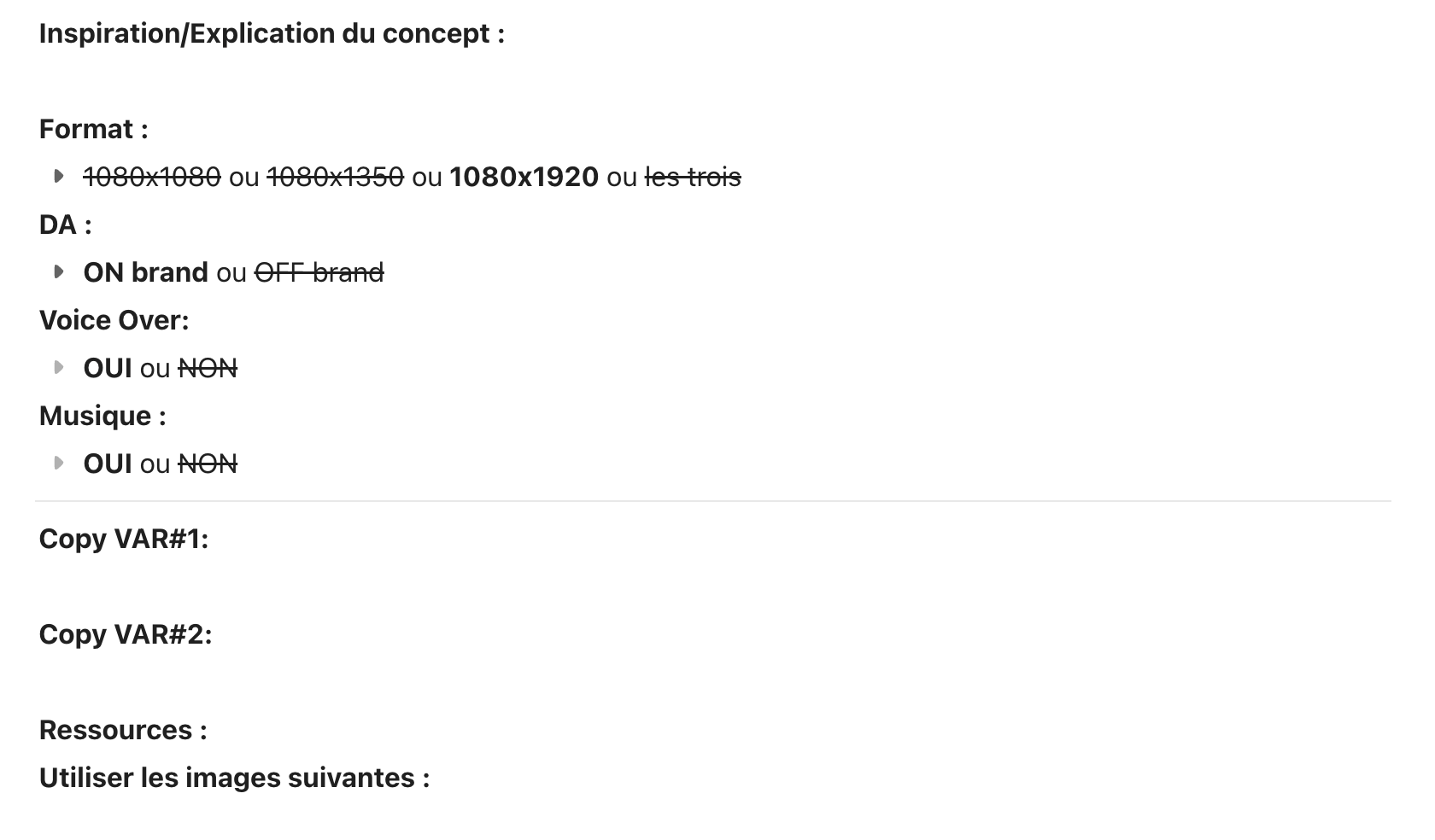
The second part is dedicated to the creative instructions for designers and editors.
It includes the inspiration or explanation of the concept, details about the format, the art direction, etc.
In some cases, I directly provide raw footage and/or assets. In others, I let designers choose the most relevant content based on the brief. They can then check the required items in the checklist and move the brief to Internal or External Validation depending on the workflow.
Phase 4 • Reporting
This is a tool I use regularly for the analysis phase to review the different audiences, angles, concepts, and overall performance.
It also allows me to build reports very quickly:


I can filter by specific dates, audiences, and any type of data my client needs to understand the strategy behind the creatives.
It’s also essential before restarting Phase 1, especially during the batching phase, to ensure the next cycle is driven by insights rather than assumptions.
Writer
Lucas
Cetegory
Creative Strategist
Reading Time
8 Minute